Tuesday, 29 September 2020

DATCHET TO MAIDENHEAD: a continuing walk along The Thames Path. (Friday 25th September 2020)


Datchet is located in the south east of the screen shot map. Maidenhead is in the north west part of the  map. We walked on the north bank of The Thames, which is the lower loop of the river shown  where the Thames Path wends its way.

Tony Brown and I continued our Thames Path walk on Friday 25th September. On recent sections of our walk along the Thames we have been getting further away from London into Berkshire. The sections of the Thames we have walked recently, have taken us  from Hampton , near Tony’s home, to Lower Halliford and then on to Chertsey, Egham and Staines. It feels a long time ago we first started walking the Thames Path, beginning at Woolwich Ferry east of London with John Lodge , who has joined us on many of the sections.  Tony and I last walked from Staines to Datchet so Datchet became our starting point for this recent walk. The Thames has many tributaries, islands, loops, locks and  reservoirs and we have enjoyed so many of them, as well as each other’s company.

The Thames Path is a National Trail following the Thames. A path was first proposed in 1948 but it only opened in 1996. The Thames Path's entire length, 184 miles, can be walked and some of it cycled.


Tony Brown beside the Thames at Datchet.

  As each stage of our walk moves further away from London going west into Berkshire, we have to plan carefully how we get to the start of the next part of our walk along the river.  This Friday I got the train from Raynes Park to Hampton. London Freedom Passes ( over 60s and only eligible for those living in a London Borough) are not valid on trains past Hampton. We can use our Freedom Passes on buses all over the country however.  Tony met me at the station. We drove to Datchet and discovered a layby with free parking,   beside the river.  

 The aim of Fridays walk was  to reach Maidenhead.  In the past we have planned short routes of no more than five or six miles along the river and then returned, walking back along our route to the car at the start. This Friday we decided to walk from Datchet to Maidenhead, a  longer walk. To return we thought that we would get the bus back to Datchet. 

Datchet is a lovely place. Until recently I had never been there. Often, driving along the M4 to Wales  I have seen signs branching off the motorway to Datchet but had no idea what was there and what it was like. The centre has   a village green with Georgian and Victorian houses and shops set around it. It feels peaceful and appears to be a very nice place to live with expensive houses set in park like grounds bordering the village and along the banks of the Thames. When you look at the map, you see Datchet beside The Thames but you also notice that the M4 motorway is  north of the village close by and that Heathrow Airport is just a few miles towards the east. Aircraft taking off from Heathrow have risen to a few thousand feet by the time they fly over Datchet but they are still climbing and the sound of their engines wining away is evident.


The centre of Datchet.

One of the features of The Thames along this stretch are the water meadows with reed beds and wooded paths and also extensive fields surrounded by tall hedgerows. It is rural and much farming goes on in the area. That seems to be an anomaly with the closeness of major roads and low flying aircraft and the centre of London not that far away. It appears that the world has passed it by and taken detours around it. Surrounded by this idyllic setting we anticipated a pleasant walk amongst trees and fields beside a sparkling full flowing Thames.

There are many houses beside the Thames  with lawns reaching down to the waters edge. The Thames path encroaches on peoples land in some places. Many of these houses are set in beautifully manicured gardens with shady trees and shrubbery’s bordering smooth green lawns. The houses are often extensive in size and I  imagine in price too. Some are modern and are built on stilts. Some have hydraulic pillars positioned under their foundations. The older houses appear to be built on raised ground with high stone walls fronting  them. Of course all these architectural  features are there to deal with  flooding when the river rises above its banks.


Houses beside the Thames.

Many of the larger islands, called aits, have housing on them too set in idyllic settings. Some of these properties have their own piers at the side of the Thames with luxurious launches and motor yachts moored at them.

Each time we walk the Thames Tony and I see canal boats and sometimes large motorised barges that have been converted into luxurious water born  homes. Many of them have stainless steel chimneys for log burning stoves, small wind turbines and expanses of solar panels. Some have satellite dishes.


A barge home on the Thames.

A little way along the river from Datchet we approached Windsor and crossed over a  stone bridge with iron ornate shields attached to the stone parapets informing us that the Queens commissioners had built the bridge in 1851. The Queen being Queen Victoria. The middle span of the bridge was replaced during the 1960s with a concrete arch, topped with rails on each side, making the bridge look like a poor ill designed hybrid. The two stone ends recall an attractive sturdy bridge of the past. We can only guess its former elegance. Windsor Castle rose above the roof tops of Windsor town to our left.


This was the original part of the bridge before the modern central arch. 

It was interesting to see on the opposite bank of the river the expanse of Windsor Race Course. Neither Tony or I had known such a racecourse existed. The grandstand in the distance looked old in style, perhaps Victorian. We wended our way across meadows and fields called ,”The public fields of Eton College.” It occurred that Eton College must own a lot of the land in the vicinity.

Every so often we came across locks with their gate systems allowing boats to pass from one level of the river to the next. We stopped at Boveney Lock ,  to eat our packed lunches. The weather was mild although the day had begun with some rain . The temperature was  a little lower than of recent, about 17 degrees but the wind was strong. Tony found a spot that was sheltered from the wind at the bottom of the levee bordering the river here, near the lock gates. We drank tea from our flasks and ate our sandwiches and fruit. Locks have been built along the Thames since the 17th century. Boveney Lock was built in the  19th century to help control flooding and to ensure the Thames remained navigable at this point.


Boveney Lock.

We walked on past Dorney Lake that is an Olympic rowing lake used in the London 2012 Olympics. It belongs to Eton College.

On the opposite side of the river, set within rolling lawns and tall trees was a castellated stone built manor house called, Oakley Court. We could see extensive patio areas with large sun shades. Marquees were set up within the grounds. This is an exclusive hotel and spa complex. I Googled Oakley Court later when I got home. A room for the night costs between £400 and £1000 with views over the Thames and the lush meadows and fields surrounding it. The bar is open to casual callers but the restaurant must be booked ahead, especially in these times of Covid 19.


Oakley Court.

We walked on past the fields surrounding Dorney Reach. We could hear the sounds of the M4 motorway in the distance. We approached the massive hulk of the bridge taking the M4 over the Thames. Widening of the motorway is happening at this point so the usual pathway is blocked. Pontoons with non slip surfaced walkways have been constructed, floating on the river under the bridge . We walked under the motorway and saw  the impressive long steal arches that support the bridge and motorway above.


A pontoon passing under the M4 motorway.

Often along the Thames we have come across boatyards. All the various luxurious motor launches and the canal boats and barges need to be taken care of. Their bottoms need to be scraped and renovated. Many of the boatyards appear to be family businesses and by the look of these boatyards and the buildings comprising them they look as though they have been there a long time. I remember , as a child seeing workshops, garages and boatyards in Southampton made from corrugated iron and painted a dirty matt green. Many of the boatyards along the Thames , with their mess of ropes, chains, cranes and rusting buoys have this same timeless feel.


A boatyard on the Thames.

We soon reached the next lock at Bray. The village of Bray on the other side of the river was out of view at this point because a series of aits stretch the length of the river here. One of the  aits is called Monkey Island Estate. The grand white stuccoed mansion on the island is another exclusive hotel. Two famous restaurants are at Bray, The Fat Duck run by Heston Blumenthal and the Roux Brothers’ Waterside Inn.  Bray is famous from the culinary point of view nowadays but much earlier than that ,

In good King Charles’s golden days,
When Loyalty no harm meant;
A Furious High-Church man I was,
And so I gain’d Preferment.
Unto my Flock I daily Preach’d,
Kings are by God appointed,
And Damn’d are those who dare resist,
Or touch the Lord’s Anointed.

And so the Vicar of Bray is remembered. He changed religious allegiance to whoever was on the throne so he could keep his job. The poem actually refers to a number of vicars of Bray from Tudor times when religious allegiances could cost you your head up to  vicars in the 17th century  who were also keen to keep their incumbency. We walked past Bray Lock on the north side of the river.


Bray Lock

From Bray,  we were getting tired by now our legs feeling the effort, we walked on to Maidenhead passing under the elegant Victorian railway viaduct, designed by Isambard Kingdom Brunel and featured in J W Turner’s painting  Rain, Steam and Speed.


Maidenhead Railway viaduct, painted by 
 J W Turner. His painting is called ,"Rain, Steam and Speed."(1844)

On reaching  the road bridge, we walked into the centre of the town. We asked people as we walked along where we could catch a bus back to Windsor. Eventually Tony and I found a bus stop, walking through the market and out the other side of the High Street. We took the number 15 to Windsor. The bus took a rather circuitous route looping past the local hospital, through  a housing estate, all the time  travelling, in apparently, the wrong direction  but eventually it drove on to the centre of Windsor. 


Windsor town and castle.

We alighted near the old town hall designed by Christopher Wren which is also close to the public access to the castle. We waited some  time for a number 10 bus to take us back to Datchet. Windsor to Datchet is not far and this part of the journey took no time at all. 

Before we departed from Datchet, an enticing pub called The Royal Stag overlooking the village green beckoned for a reviving pint of beer. Parts of the Royal Stag date back to 1400. Since the Covid crisis we have not been into many pubs.  A sign instructed us to put on our masks and  wait to be shown to a table. We both have the recent National Health Service Covid 19 app on our phones so we scanned the NHS QR code. This new device will turbo boost track and trace,I hope. There were not many people in the pub and it was not long before  one of the bar staff came and showed us to a table. Sitting at the table we were permitted to remove our masks. There was a good social distance from other people at other tables.  A menu enabled us to order beers. I chose a local brew called Grenadier and a packet of salt a vinegar crisps. We could go to the gents as long as we  put our masks back on. 


Part of Datchet village green.

Tony drove me to the station at Hampton. On the train  I sat back, with my face mask on of course,  and phoned Marilyn. "Can you pick me up at Raynes Park?". I felt knackered.

So the next part of our Thames Path Odyssey  will take us from Maidenhead and on past Cliveden and Cookham, then Marlow and on towards  Henley, both very beautiful historic towns on the Thames. I often get the sense that we are walking through Kenneth Grahame’s Wind in The Willows countryside and Jerome K Jerome’s Three Men In A Boat comes to mind also.


ADDENDUM:


 Rain, Steam Speed by J W Turner (The Great Western Railway', painted in 1844.)


Wednesday, 13 May 2020

EDUCATING THE EAST END a Channel 4 series

Mr Bispham in the first episode of EDUCATING THE EAST END at," Frederick Bremer School," in Walthamstow.


Among the myriad of ,”real life,” documentary drama series such as ,”Made In Chelsea,” “Made in Essex,” “Footballers Wives,” and other semi glamorous life portrayals, are a set of documentary dramas that are a sub-genre within this set of ,”real lives.” It concerns schools. “Educating The East End,” an eight part series of programmes follows  a head teacher, the teachers, the pupils,  lessons and  staff meetings that take place at the, Frederick Bremer School in Walthamstow.
The focus of the first episode, are the trials and tribulations of Mr Bispham, a trainee teacher learning his craft on the ,Schools Direct programme. Schools Direct is one approach to becoming a qualified teacher. The school  pays you a salary on an unqualified teacher rate while you are supported in learning classroom skills. You previously have had to work for at least two years in another career and also have a good degree.  Schools Direct has some advantages over the usual one year PGCE route. More time is spent in the classroom and you are attached to just one school. There is some time allocated to University lectures where the theories of child psychology, child development and the philosophy of education are taught. At the time this programme was made Mr Bispham is the youngest member of staff in the school. He has been put in, at the proverbial,” deep end,” teaching English to a boisterous year 9 class.

We see Mr Bispham first of all waiting in a classroom as a rowdy group of 14 year old, year 9 pupils enter.He thinks of the girls in this class as ,”a force of nature.” He calls each pupil by their name and talks to each one asking them something about themselves. Later he tells the interviewer, out of the hearing of the children, that teaching is 50% ,”stand up,”and 50% motivational speaking. With a lot of ,”banter,”it takes a few minutes for him to get all of the class attending to him and one girl, Tawney, will not stop talking. Tawny, with a pierced tongue  and a big attitude, wants to be an actress and has applied to. “The Brit School.” She is certainly good at,” playing up,” in lessons. Mr Bispham is straining every fibre, alert to every incident and comment and interaction going on in the class. He contends with little arguments amongst some, cheeky comments about his name and his ethnicity, all challenges to his authority. He gets the class to focus on a line in Shakespeare’s, ”Much Ado About Nothing.” On the interactive whiteboard is a speech between,  Claudio and Leonato “ Give not this rotten orange to your friend/ She’s not the sign and semblance of her honour.” The class discusses the meaning of any words they are unfamiliar with and then discuss attitudes to women.  Those ,”strong,” girls in the class are engaged with the topic. It means something to them. After the lesson Mr Bispham leans against the door frame at the entrance to his classroom. He sighs and looks at the ceiling. Everything has been drained from him. He is exhausted.

I often stood at the back of the school hall, on  Friday afternoons, during the end of week assembly, leaning against the wall for support, looking and feeling just like Mr Bispham. I stood there, my face drained, the life sucked out of me. You need to be self reflective.  What can I do next? How do I get them to learn? How do I get them to progress? How can I do  better?  Mr Bispham would agree. I remember feeling every nerve in my body and  like Mr Bispham there were moments when I dug deep for strength and I too wondered if teaching was for me.  I watched Mr Bispham adapting, there, on the screen.

The look of worry and concern etched on Mr Bispham’s face in the corridor after Jenny Bishop , the head, informs him his end of year assessment is due, was my face too sometimes. She gave him a date for the observation. You could see he was anguishing over what she would think of him teaching that year 9 class. She asked if it was convenient. He said ,"of course," and made some comment about the class being difficult. But the head knew that. It was very interesting to watch Mr Bispham go from the despair he must have felt before the lesson to elation after his observation. He was given a GOOD assessment.  Jenny Bishop is evidently a perceptive, warm, strong person, (a great description of a good head). The deputy head praised him too and agreed with the GOOD assessment of his progress and his developing skills. An onlooker, somebody who does not work with children, might not have understood.

Mr Bispham was honest and straightforward. He joked  and the pupils in the class knew he cared about them no matter how awful they behaved. In his observation lesson he was well prepared. He had a focus and clear aim. He had his materials and resources ready, He had a child centred approach taking into account the needs of various pupils. He planned his lesson to fit their intellectual needs. He got them   working in twos, providing them with questions and tasks which challenged them. They were engaged and he questioned them bringing out their thinking processes. They were chatty and lippy and he confronted them with any unacceptable behaviour, pointing out what they were doing, the affect they had on others and the effect they had on himself and he demonstrated what they should do. These are good teaching skills and behaviour management.

The interviewer asked the children about Mr Bispham. They all said he was a great teacher. They liked him and  they all said that they  wanted to do their best for him in the observation lesson and not let him down. He had their trust because he believed in them and so they believed in him. Good teachers give their heart and soul to the kids they teach.

He deserved his, GOOD, assessment. He earned it with more than what can be described as hard work. We watched him lay himself on the line for that class.

This series is something we should all watch. It can’t show every aspect of a lesson and the teaching process, but it begins to delve deeper than most people would normally be able to experience. This series of programmes show us what heroes teachers are and what self-sacrifice  and talent and hard work they  put in. One thought that went through my mind was, what would a teacher from, Harrow, the great public school just 18miles west of Walthamstow, think about Frederick Bremer School and Mr Bispham? How would they teach year 9? Jenny Bishop, is asked at one point why she wanted to be the head of Frederick Bremer. She smiled and said she wanted the challenge and the opportunity to make her mark on children and a community that needed the best. She was fully aware of the,” mountain,” she had to climb. She is a very brave, courageous and hopeful person with a vision and she knows how she wants to achieve it. If she keeps finding the good in Mr Bispham and praising him ,Mr Bispham , will do very well.

Channel 4


Wednesday, 22 April 2020

MY LOCKDOWN DIARY


Making my next cup of coffee.

My mother is 95 years old.  Mum remembers her youth and childhood more than she does  yesterday or today. One subject I  talk to her about  is her teenage years, which of course she lived through during the second world war. If the discussion turns to the recent queues at supermarkets and the shortage of toilet paper and the empty shelves that occurred at the onset of this pandemic my mother invariably says, “ we were better off when we had rationing.” I invariably say, “why mum?” And then she relates how she always had enough to eat and that her diet was varied and balanced which kept her fit and healthy. Then I ponder the idea of, “just what I need and no more,” and feel guilty. Of course , in “The War,” they were repelling bombs and armies which they could actually see.They could create defence systems which could work sometimes. 

The ,Coronovirus is something we cannot see and have no defence for. I have been Googling information about it. The virus is made up of unimaginably tiny spherical cells that have a corona of hammer headed spikes surrounding it which can attach them selves, like super glue, to  cells in our lungs.  This virus enters our lungs and respiratory system through fine vapour caused by coughs and sneezes and the exhalation of breath from  somebody infected. What can we do? Wash our hands, (soap removes the waxy surface of the corona cell and destroys it)  stay at a distance from people and stay home. That’s the advice.


So how are you spending your days?

This ,”staying at home,” has given me the opportunity to indulge in reading novels even more. I read sitting under a sun shade on the patio, lying on my bed at night, lieing prostrate on a sofa in the living room, lieing prostrate on a sofa in our kitchen, sitting at the dining room table. Reading takes you places. I have turned to Charles Dickens in this time of plight. Nicholas Nickleby is a chunky novel. My Penguin version is 777 pages. I am just over 600 pages in and slowly making my way through it. I am a slow reader.  In some ways Nicholas Nickleby reminds me of The Lord of The Rings. The powers of evil ranged against the powers of good. A bit like the coronavirus pandemic, I suppose. Chapter 41, by the way, is the weirdest few paragraphs I have ever read. I got to the end of that chapter and just mumbled to myself, “that’s weird, that’s weird.” Chapter 41 haunts me. Well we need to have something to take our minds off things. Dickens is always quirky to say the least and his powerful imagery is an antidote for our times.

I am a running addict; always have, always will, as long as arthritis doesn’t get to me. The weather has been brilliant. Most days have been sunny. I start my day by taking the pills. Who is not on statins at our age? I eat a piece of toast and thick cut marmalade. Once I have had a chance to walk about a bit, my leg muscles loosen up and I feel up for a good jog. I  walk to my local park, The Sir Joseph Hood Playing Fields, every morning. I then proceed to run four laps of the park. I was getting a little bored with that so I started adding a lap of the local cemetery, which doubles up as a nature reserve, until they padlocked the gates. Why? I enjoyed jogging past gravestones and reading people’s names and wondering about them.So I have invented creative ways of running round the park. I do an OXO route some days. OK that is running round the perimeter, that makes the, O. Then I cross the park diagonally and run across the top of the park ending this lap by then running across the other diagonal. That makes the  X. Finally, I run one more lap around the perimeter. That’s the second O. I have also mixed it up a bit doing an XOX and an XXO. Life is interesting.

 I often see the same people each day in the park, dad’s with sons and daughters having a kick about, couples walking, single joggers, cyclists and those who like to meditate cross legged in the middle of the field.  One family were walking towards me and their dog ran at me barking excitedly. Apparently the dog was attracted to the large red tongue on my Rolling Stones tee shirt. A mother who scoots   round the park followed by her young son and daughter also on scooters, has taken to saying ,"hello," to me. I have no idea who they are.

My hair  has almost turned entirely white. I am thinning out on top but , on the whole, I still have a reasonable head of hair and to say the obvious it grows. Recently I was thinking, and Marilyn, Emily and Abigail were telling me, that my hair needed a cut. Kamis, my local hairdressers in Motspur Park is closed. As far as I know all hairdressers are closed. I started looking online to see if I could buy some electric hair clippers. Emily was keen to have a go at my head.Many of the clippers Amazon sell are suddenly out of stock. My hairdressing plans were obviously not a unique idea.  I eventually bought some from Argos. I drove over to Argos in South Wimbledon after I received  an email from them telling me they were ready for collection. The queue was long. I stood within my two meter zone of course wearing my plastic gloves and white face mask sounding like Darth Vador every time I breathed. It took me twenty minutes to get into the shop, located in the Sainsburys Store, one minute to pick up the hair clippers  and a further ten minutes to queue to get out of the shop. Emily indeed, enthusiastically cut  my hair off, using a number 4 height level. Not as drastic as it sounds.  The hair cutting made a mess all over the kitchen floor. I was convinced my hair wasn’t evenly cut and my immediate reaction was never to meet anybody for the next month. Oh, that was already organised of course. Since washing my hair I have decided it looks fine.  The clippers cost £30. A haircut at Kamis  costs £10. Two more cuts and I will have broken even. With practice, Emily might get really good at it and I might never have to go to a hairdresser again. So, I have had a,”lockdown haircut,” and I am proud.

Until I have been kept indoors by  this pandemic, I had never heard of ,”ZOOM.” The onomatopoeic  word of course but not the conferencing site ZOOM. Up to 100 people  at a time, can appear on the screen and  talk to each other. It would be mayhem of course if that really happened. Some sort of rules have to be agreed on first. I have taken part in four ZOOM meetings so far and I must say they have been amazing. Not as good as being with people in the flesh but almost. The first two ZOOM meetings I attended were with people I used to go to school with, from over fifty years ago. A reunion no less.Of course some of them are friends I see nowadays  but the connecting factor between us were those distant school years.I have had a meeting with two other fellow Janeites who live in Virginia in the US.  I have also attended a ZOOM  talk about Jane Austen’s life in Southampton given by Dr Carol Butler a historian and academic. October Books, an independent bookshop in Portswood Southampton, organised and advertised the talk.. Seventy people attended this ZOOM meeting. We had to mute our microphones and only post questions by writing them in a text box at the bottom of the screen. It worked really well. There were people from European countries and many from the US too. The only thing you have to coordinate are the world time differences but everybody can easily work that out for themselves. Just as long as the meeting is not arranged for the middle of somebodies night.

So, what other changes have been happening to me and mine? Every Thursday evening at 8pm Marilyn and I have walked out of our front door and with all our neighbours clapped and cheered for the National Health Service and all the  key workers who underpin our lives and keep us going. Most importantly there is the process of buying food. Emily, one of my daughter’s volunteers for that. She stands in a long queue outside of our local TESCO once a week, keeping her social distancing and wearing a mask. I have begun to notice the   sounds of birds in the morning. There are no cars about. I have painted our garden fence, demolished an old shed, cut the grass three times; so far, trimmed hedges and lain down on the lawn looking at an empty blue sky. There are very few planes flying out of Heathrow now. Marilyn and I,” WhatsApped,”  our granddaughter, Emma in Berlin on her first birthday and waved  and chatted to her. Marilyn and I lay awake one night listening to the most awful inhuman screaming coming from the gardens near us at the back of our house. Emily told us, in the morning, that it was foxes mating. Really?

And then, of course, we watch the news everyday on the television.

So what got me writing my Lockdown Diary? I read the following article in The Guardian by Margaret Attwood and was inspired. I need something to fill my time. A bit of self reflection is good for the soul.


Margaret Atwood’s lockdown diary: life as an eccentric self-isolationist


Sunday, 29 March 2020

LEITH HILL WALK with Tony Brown and John Lodge.


The Ordnance Survey Map showing  Leith Hill in Surrey.

Friday 13th March, the Coronavirus is now causing us to “social distance.” We are still wondering what,  ”social distancing,” actually means in practice. Toilet rolls are disappearing like,” hot cakes,” off TESCOS supermarket shelves. Is that a good analogy? The sudden need for toilet rolls is leaving many of us bemused. We are beginning to feel cautious about  meeting people and we have decided that going to the local pub or restaurant is not a good idea at this time. John, Tony and myself still, however, felt confident about driving to, Leith Hill,  within our cars. Walking up steep inclines and along the muddy tracks dissecting dense woodland, didn't bring us into contact with anybody. Boris Johnson and  the chief medical officer for England, have assured us that taking daily exercise in ones and twos is a beneficial thing to do at this time. Very few people were about and those we encountered could easily be kept at a distance.

The way to the top of Leith Hill from Landslip Car Park.

Leith Hill  is the second highest point in the south east of England at 294 metres in height above sea level. It is an SSI site (a site of special scientific interest). The area around the hill supports rare moths, many examples of fungi, all three types of British woodpecker and a large and varied invertebrate community. It is part of the Greensand Ridge which, in turn, is part of the Artois Anticline which covers South East England and Northern France. This geological stratum was laid down in the Cretaceous period 145 to 66 million years ago. Greensand is a sandstone escarpment consisting of ironstone and Bargate Stone, an extremely hard stone.  The sandstone is overlain by chalk and clay deposits. This diverse substratum attracts many species of trees and wild flowers.


Leith Hill Tower on the summit of Leith Hill.

On the summit of Leith Hill is an 18th century tower built in the Gothic style. It was built between 1765 and 1766 by Richard Hill who lived in nearby Leith Hill Place. It was at first called Prospect House, but this later changed to Leith Hill Tower. It is 19.5 meters high. In the 18th century visitors to the tower were provided with, “prospect glasses,” similar to binoculars. Nowadays there is a telescope for visitors to view the scenery. The south coast can be seen from the top on clear days.
Leith Hill Place, seen nearby from the tower was originally owned by Richard Hill who had the tower built. When he died in 1772 he was buried underneath the tower. It fell into ruin after his death. It was later reopened in 1864 by a Mr Evelyn of Wotton House situated to the north of Leith Hill. On the parapet of the tower there is a viewpoint indicator that commemorates Edmund Seyfang Taylor, an early pioneer rambler. Leith Hill Place was later owned, in 1847, by Josiah Wedgewood III and Caroline, his wife. Josiah and Caroline were the grandparents of Vaughn Williams, the composer. Vaughn Williams spent much of his childhood years at the house and later inherited it and eventually left it to The National Trust. There is an exhibition about his life at the house. Caroline Wedgewood was a member of the Darwin family and Charles Darwin often visited Leith Hill Place and conducted experiments in the grounds.

The Ordnance Survey triangulation point at the top of Leith Hill.

Next to the tower is an Ordnance Survey triangulation pillar. It is the position where the 6 inch and 1:2500 Ordnance Survey maps for Surrey originated from.

 Tony and I parked in Landslip Car Park in a wooded area below the summit. John,  parked on the other side of Leith Hill. We arranged to meet next to the tower. When Tony and I arrived at the top there was no sign of John at first. Then we noticed a vigorously waving person calling down to us from the top of the tower. My first thought was of the Monty Python film, The Holy Grail when a French knight in armour shouted insults in a bad French accent at the attacking English force. No insults, in bad French  came our way. We climbed the narrow steep spiral staircase to the top and joined John. The view was breath-taking. It was a  clear day  and we could see to the horizon. Some riders on horseback emerged from woodland near the base of the tower as we looked down.

Horse riders at the base of the tower.

A lady serving tea in the National Trust café in the base of the tower assured me that the area of grass just outside the tower was where the recent Jane Austen film adaptation of the Box Hill picnic scene from the novel EMMA was filmed. The 2020 version of Emma, directed by Autumn de Wilde and starring Anya Taylor Joy and Johnny Flynn in the starring roles is worth seeing. It is a version of Emma for today. Some Janeites disapprove of it. The real Box Hill is only a few miles away from Leith Hill on the other side of Dorking. Nowadays it is a great attraction for cyclists, walkers and family picnics, so perhaps it is too busy for filming purposes. The elevation of  Leith Hill and the panoramic views form the top are virtually identical to the height and views from Box Hill. Nobody would know.


The site used for the picnic party on ,"Box Hill," in the latest film adaptation of Jane Austen's novel EMMA. 

From here we  used an Ordnance Survey Explorer map (Dorking, Boxhill and Reigate 1:25000 scale) to work out a route, walking north west to begin with, taking us from the summit of Leith Hill. A group of  scots pines stand majestically at the top of Leith Hill and we started our walk underneath their spreading canopies. Descending the slope of Highashes Hill, to one side of Leith Hill. we made our way down a steep muddy slope through mixed deciduous and coniferous woods. Silver birches, pine, larch, interspersed with a few large oaks constituted the woods.  Walking has a number of advantages. You tend go at a slower pace, especially when the going gets difficult. You have time to look and listen and take in the natural world around you.  We approached High Ashes Farm. The farm house, barns and sheds were grouped in an open space.

High Ashes Farm.

From High Ashes Farm we walked on into woodland again, passing through Burnthouse Copse, Great Foxmore Wood and Rosiers Wood. As we  slid and stumbled along one very muddy path we came across a car, smashed and dented, hidden within the trees and undergrowth. It appeared somebody had driven it there along the muddy track. It had off road tyres and the exhaust pipe was positioned like a mast sticking up above the car bonnet.  We checked nobody was inside. It didn’t look as though it had been their long.

Wrecked and abandoned car in the woods.

Further on we passed Hopedene Farm.  The three of us emerged onto the Horsham Road with a few houses hidden behind tall hedgerows and trees here and there. This was the outskirts of Holmbury St Mary. The village is situated on the sides of a steep ravine cut into the Greensand ridge within the Hurtwood Forest which is reputedly the largest area of common land in Surrey. It is unusual because its geographical location places it in two different borough councils. Most of the village is in the borough of Guildford within the Shere civil parish. The east side of the village street however is within the Mole Valley District within the Abinger civil parish. People in Holmbury St Mary pay their local council taxes to two authorities.

Holmbury St Mary, seen from the churchyard of St Marys.

As we entered the village we were passing St Marys church and decided to look inside. We walked through the graveyard to the church entrance. From here, because the church is situated on the hill side, we got a clear view of the main part of the village and the hills surrounding us. The interior of St Marys is in the gothic style, much copied by the Victorians.  Stained glass windows streamed coloured light into the interior.  A calm, meditative place.

The interior of St Mary's Church Holmbury St Mary.

Originally the village was called Felday.  St Mary’s, was built there in 1879, paid for by George Edmund Street who also built himself a large house in the village called Holmdale. He had the village renamed after Holmbury Hill, which overlooks the village and the name of the church, put together. The village has two styles of architecture, the Woodhouse copse style, an arts and crafts style designed by Oliver Hill in 1926 and Jolwynds, a modernist house, also designed by Oliver Hill in 1926.

An arts and crafts style of house in Holmbury St Mary.

There is a well in the middle of the village where Tony, John and myself took photographs of ourselves posing with the winding mechanism under the oak supported tiled roof shading the well. After asking a passing local the way to the pub we retired to The Royal Oak where we were welcomed by a cheery barmaid. We found a corner table near a window overlooking the front of the pub and settled down. The pub has its own microbrewery and so we ordered the house beer, three pints of,” Felday Special.” Always the sight of fish and chips on the menu is an attractive prospect so we also ordered three fish and chips too. The beer took a while to arrive because the landlord needed to put on a new barrel. After putting the new barrel on tap he came to talk to us and we learned that the fish we were about to eat came fresh from Cornwall every day. He also told us about his beer brewing exploits. The fish and chips were superb. I haven’t eaten such well-made chips in a pub for a long time. The beer went down well too and if we were not moving on I could have stayed and drunk another pint. What we only noticed when we got outside the pub and were walking away was that the receipt I was given for our beer and food was rather cheap. Tony realised, that because we had had to wait for the beer to be served, the barmaid hadn’t charged us for the beer. I for one am going back to the Royal Oak in Holmbury St Mary. How good is that?

The Royal Oak pub.

We made our way through the village looking at some of the  cottages and a small field laid out as allotments where people are growing their own fruit and vegetables. We passed Felday Chapel on the rise of ground to our left, as we walked on. It is a 19th Century Congregational Chapel. The Congregational Churches are independent religious groups that hark back to the Puritan tradition. They are non conformists . This tradition is much simpler and less elaborate than the Church of England services held at St Marys on the other side of the village.

Felday, Congregational chapel.

 The village is reputed to be a template for the Surrey village portrayed in E. M Forster’s ,”A Room With A View.” E. M. Forster was brought up in Abinger Hammer nearby and knew the Surrey Hills well.
 A path took us off to the right in a north easterly direction up a  steep hill. We plodded up this high slope through a wood of tall.slender  larch trees. A young deer hurried through the trees near us and disappeared into another part of the wood. We eventually reached the top of the hill and came out onto a plateau with an area of felled trees and a wide woodland path. We began to lose our position on the map but Tony decided that with the sun in the sky on our right, our final destination, back at Leith Hill Tower was south of us. We carried on eastwards through the woodland covering  the crest of the hill and came across some converted farm buildings. They appeared to be wealthy homes with Range Rovers and Porche sports cars parked in their drives. 


John and Tony walking onward and upwards.

We walked on through ,”Pasture Wood,” and crossed Pasture Wood Road into a lane which we thought took us in the correct direction. In front of us was a magnificent arts and crafts, Mock Tudor, mansion. Manicured sports fields spread out in front of it. Some teenagers were being taught football skills by a sports teacher. We stopped for a moment to work out our route once more.I later found this school on my OS map. It is called Hurtwood House School.
This is a statement on the school website.
“ Hurtwood combines the best elements of the traditional boarding school system with the best elements of the modern sixth form college to create a wholly unique and individual establishment.
While breaking new ground educationally, it has retained traditional values and has created an inspirational but safe stepping-stone between school and university.”
I read on about its educational philosophy and I must admit I was impressed. It’s teaching methods are creative and child centred. It is a fee paying, private school.
The building, Hurtwood House School is based in, has an interesting history. It was built originally for Beatrice Webb and became the centre,between 1947 and 1986, for the, ”Webb memorial Trust for Rethinking Poverty.“ Beatrice Webb  helped her cousin Charles Booth in creating his poverty map of London in the  late 1890s and early 1900s and she contributed new ideas to political and economic thinking. Along with her husband, Sydney Webb and George Bernard Shaw she helped found the London School of Economics. She supported the cooperative societies.

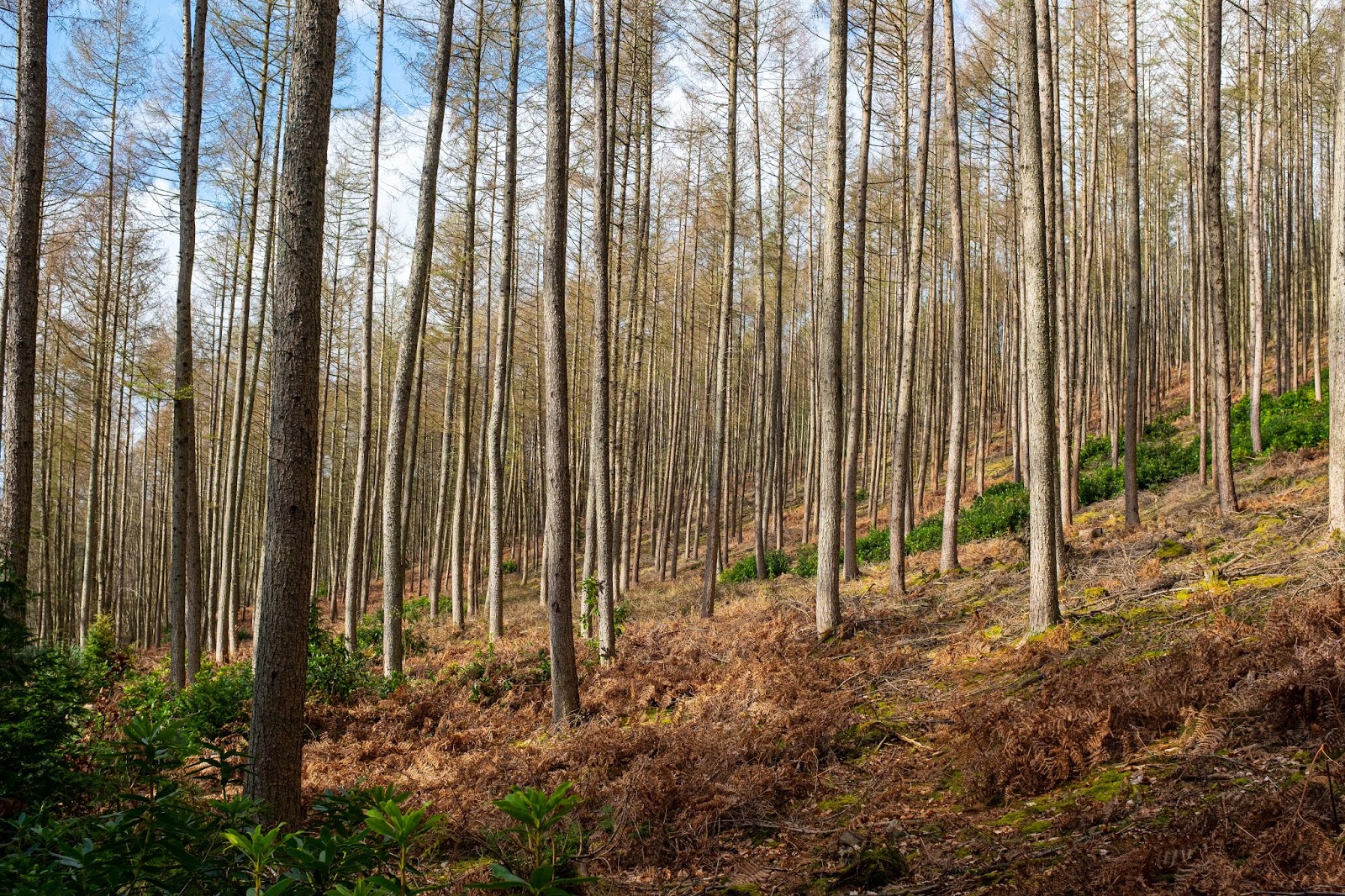
Larch woods.

Tony, John and I walked on uphill now, keeping Leyland Farm and Leylands Road to our left until we branched south and, as we hoped, made our way back up to the summit of Leith Hill. We got back to Leith Hill Tower, rested for a while looking out over the Surrey countryside and then said our farewells. 
Tony and John resting, back at the top of Leith Hill after our walk.

We have another walk planned for when this virus eventually disappears. John and I have begun a Shakespeare walk in London which we have half completed. Tony will join us for the final section, when we can continue.


 Tony Brown and myself on the top of Leith Hill Tower.


Saturday, 29 February 2020

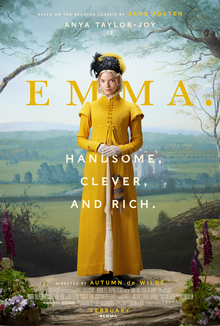
EMMA. a review: Directed by Autumn de Wilde


Callum Turner (Frank Churchill) Anya Taylor Joy (Emma) Johnny Flynn (Mr Knightley)

 Cast: Anya Taylor Joy as Emma, Johnny Flynn as Mr Knightly, Mia Goth as Harriet, Callum Turner as Frank Churchill, Amber Anderson as Jane Fairfax, Miranda Hart as Miss Bates, Bill Nighy as Mr Woodhouse, Tanya Reynolds as Mrs Elton, Josh O’Connor as Mr Elton, Rupert Graves as Mr Weston, Gemma Whelan as Mrs Weston nee Taylor, Connor Swindells as Mr Martin and Chloe Pirrie as Isabella Knightly nee Woodhouse.

Wimbledon Odeon,  Wednesday 26th February,  Marilyn and I arrived for the 11.10 performance of the new, Emma. showing in  theatre number 6. We had seats at the back. There were two people in the row infront of us and two more further down the theatre, closer to the screen and that was it. Theatre number 6 has a capacity of 175, the smallest of the screening theatres. Was this an omen? Six people sitting in a space for 175? I  read Mark Kermode’s review in the Guardian. He gave it three out of five stars. Not bad but could do better.

My thoughts were, will Autumn de Wilde’s Emma get Austen’s subtleties concerning the different  relationships right? Will the actors be any good? All is lost if they can’t cut the mustard. What might we get out of this Emma that speaks to us in 2020? Will the film  tell Jane Austen’s story well?

The film begins, focusing in from an expansive bucolic scene of green pastures and wooded areas to an iconic 18thcentury mansion, Hartfield. We hone down to a gothic styled greenhouse and enter to a scene of peace and calm and meditative background music as Emma, played by Anya Taylor Joy, slowly, carefully  moves, almost like floating in a dream, examining her blooming red roses while servant girls hover , secateurs poised ready to snip the stem of any flower Emma thinks fit. Anya Taylor’s eyes look and roam and pierce us to our souls. Oh! those eyes. She pauses, she considers, she moves on and decides, “That one.” And the flower is cut. This opening scene is very clever and says in this silent dreamlike ballet  all that Austen says in the opening words of her novel.

“ Emma Woodhouse, handsome, clever and rich, with a comfortable home and happy disposition, seemed to unite some of the best blessings of existence; and had lived nearly twenty one years in the world with very little to distress or vex her.”

The film is lit  brightly and the colours, not just of the costumes, but of the scenery too has a pale pastel sheen, which can only be achieved through the cinematography. The colours have a childish quality. It reminded me of the sherbet flavoured,” love hearts,” we used to buy from our local sweet shop when we were children, handing these pastel coloured sweets to each other with such embarrassing phrases as , “All Mine,” “Love Bug,” “Find Me,” “Only You,” and “ Kiss Me,” embossed on them. It occurred to me, that that analogy does indeed  embody Emma Woodhouse’s emotional level exactly, at the beginning of the film.

Sherbet flavoured ,"Love Hearts." Childish fancies.

 Anya Taylor Joy, when I saw the  adverts for Emma emblazoned on the sides of  some London buses as they drove, past didn’t fit my imagined idea of Emma. She looked too modern, too 2020 and with eyes that you can sink into and get lost in forever. I didn’t imagine Emma as being seductive. I imagined her as pompous, controlling and  distant, a whole ,”class,” above the other characters in the story, certainly not seductive. Anya is very good in the part though. She has just the right amount of intelligence, naivety and controlling confidence and a powerful self-belief, at first.

As advertised by London Transport.

We tend to expect beautiful actors and actresses , the men always being compared to Colin Firth and I am sure there will be those who want to make such comparisons with this film between Colin Firth and Johnny Flynn. However, the actors in this adaptation go against the usual trend I think. Frank Churchill, played by Callum Turner has big ears that stick out. All the better to listen with of course and he does listen to conversations, carefully avoiding any close emotional engagement with anybody. Thus he keeps a distance , keeping his true intentions secret. Johnny Flynn, who plays Mr Knightley has a battered look about him, a feint white scar on one cheek and eyes that are not quite even sized or level on his face. A rugged handsomeness, a face of experience, let’s say, which  aids  the fact that his character, Mr Knightley, is 37 or 38 years of age to ,Emma’s 21 years. The women characters tend to have no makeup on their faces adding a plainness to their general look. Although having said that Anya Taylor Joy does have her face made up, blush pink cheeks and red lips, which makes her stand out.

Emma standing on  Leith Hill,the hill used as Box Hill.

The scene I always look out for in any Emma film is the Box Hill picnic. This one doesn’t disappoint. Leith Hill is used for the film set and not the real Box Hill, but I can forgive that.Actually both hills are part of the same range of hills, The North Downs, in Surrey.  Leith Hill has less roads and buildings in the panoramic view from the top. Leith Hill however,I always associate with the composer, Vaughn Williams and not Jane Austen’s novel, but anyway, I am nit-picking. I hope you can all one day visit Leith Hill as well as Box Hill. I will continue. In this Autumn de Wilde re-imagining of this iconic scene she portrays an important example of how this Emma is relevant to today. She doesn’t deflect from Austen’s plot and action in anyway  but emphasised are things that address the concerns of our modern age. The superficial prattle of Frank Churchill announcing, “I am ordered by Miss Woodhouse, who (wherever she is presides), to say that she desires to know what you are all thinking,” of course has to be included, but those inconsequential speeches are kept to a low key compared to the emphasise on the insult Emma gives Miss Bates. That scene is heightened. Mr Knightley’s reprimand of Emma and Miss Bates's obvious hurt becomes the main thing. We live in an age of online trolling and abuse and as a society we are struggling to know how to deal with this dangerous and damaging practice. This Box Hill scene demonstrates the hurt we can cause other people.


This is the Burford Spur on the side of the ,"real," Box Hill, the probable site of Jane Austen's picnic party in, Emma.

With Jane Austen film adaptations, we have come to expect beautiful settings and rich architecturally magnificent houses set within Capability Brown or Humphrey Repton landscapes and this film certainly does not disappoint. The settings are magnificent. The houses used in this film  are, in our real world, open to the public and probably have very nice cafes and shops. I have visited some of the houses featured over the years. Hartfield, the home of Emma and Mr Woodhouse is Firle Place in East Sussex. The small town of Highbury is the picturesque village of Lower Slaughter near Cheltenham in the Cotswolds. Donwell Abbey is Wilton House near Salisbury. Mr Weston’s house is Chevenage House near Tetbury in Gloucetsreshire. The Goddards school house is Kingston Bagpuize House, south west of Oxford.   However, I do wonder that these magnificent examples of the 18th century British architecture and landscaping are used by fillm companies.They were originally owned by the super-rich, the billionaires of the 18th century and the characters in Jane Austen’s novels would never have lived in such great luxury and splendour. Mostly they would have been second league landowners. What a film like this and I suppose all the other film versions and television versions of Austen’s novels become, are  tourist shop windows. “Come and visit me.”
The ball at the Crown Inn in Highbury is more than one sort of dance. In Jane Austen’s novel much of the action is seen through Emmas eyes. She  wills interactions between people and suffers because they don’t happen the way she would like.  Autum de Wilde creates a floating world in the mind of Emma. Emma sees people as characters  that can be moved about like sailing boats on a pond, a puff of wind here, a puff of wind there. She would like to manoeuvre  this person here or to that person there,  and keep everybody within her control; Harriet to Mr Elton, possibly herself to Frank Churchill. But all goes wrong. “Breezes,” blow in other directions. Harriet thinks, because Mr Knightley has asked her to dance she is in love with him and he her. After the ball in a carriage with Mr Elton he professes his love for Emma. This is not what should be. The pitfalls of internet dating comes to mind. As for TV shows such as Blind Date and Naked Attraction, perish the thought.

By the way,the music written by Isobel Waller Bridge for the ball at The Crown Inn and as background music throughout the film fits this Emma superbly. It has a country feel to it sometimes. When required Waller Bridge has composed music that fits completely an 18th century dance. At the same time the music feels fresh and up to date, very enjoyable. An amazing achievement.

If Emma is about nothing else it is about the development and growth of relationships, and is an exploration of what love is. The tensions and problems along the way just make for good drama and emotional engagement. Autumn de Wilde is  making this Emma relevant to today in her treatment of , love.

One love affair  at the start of the story has Emma  heartbroken and bereft. Her surrogate mother,  teacher and eventually soul mate, Miss Taylor marries Mr Weston. A scene in the film shows the two of them either side of a door (powerful symbolism) heads touching the opposite sides, centimetres apart and speaking from their heartfelt emotions about what each means to the other.The new Mrs Weston will only be half a mile away but a universe as far as their changed relationship.

Emma also has a relationship with Harriet, played by Mia Goth, who brilliantly portrays innocence, wonder and bewilderment in equal measures, an orphan from Mrs Goddard’s School. This relationship too grows ever more intimate.  Emma tries to control who Harriet marries against Harriet’s own feelings.  Harriet’s fleeting fancies for Mr Elton and then Mr Knightley are not where her true heart is of course. It is with Mr Martin. Mr Martin portrayed  steadfastly by Connor Swindells, shows admirable patience in love. This is another relationship Emma has to contend with or perhaps struggle against. Harriet really loves Mr Martin and Emma  finally does accept this situation once she has gone through her own Damascene revelations.

Another relationship that comes to fruition eventually is that of Frank Churchill and Jane Fairfax. Frank goes through a lot for his love for Jane Fairfax and although this is not approved off by many, that relationship is accepted by all in the end including of course Emma. All these relationships other people have are also steps along the way towards Emma’s  own emotional maturity. The relationships and how they are portrayed in this film and how they develop make it a very modern story.

A further development for  Emma  occurs after her atrocious  treatment of Miss Bates on Box Hill. She, in atonement for her awful behaviour, visits Miss Bates. Few words are spoken but Emma shows her sorrow and Miss Bates shows her unwavering love of Emma. Visiting those she has slighted and showing her awareness of what she has done are markers in the development of Emma's emotional intelligence and Autumn de Wilde continues to highlight these moments.

Miranda Hart as Miss Bates surprised me. Miranda is an excellent comedic actress and has created her own comedy sitcom. On TV we laugh out loud at her because she is hilarious. Her Miss Bates is a funny character  in the sense of being quirky but really she manages to portray somebody who  requires our sympathy. Miranda Hart who has a genius for making us laugh played the part extremely well without resorting to slapstick. She created a sense of the ridiculous but not in a laugh out loud way. She achieves pathos and emotional hurt. Miranda makes us feel for her Miss Bates. The only thing I cannot overcome is the fact, I have always thought of  Miss Bates as short and squat, ( Jane Austen does not describe her as such) Miranda Hart is tall and gangly. Not everything can be perfect.

By the end of de Wildes, Emma, Mr Knightly and Emma develop a powerful love for each other which they both become aware of ,suddenly, and it seems almost as a surprise.  Their deep connection was there all along, of course. Both Austen and de Wilde provide the clues, from the start of the novel, in the case of Austen and from the start of the  film  in de Wildes case.  Although the main crux of the  film is of course about Emma  passing through  a time of self-refection and change to become Mr Knightleys equal in love.  Mr Knightley does not merely hang around waiting for Emma to grow emotionally; he too has had to change. His  awakened perception of Emma has taken much understanding, patience. empathy and emotional intelligence on his part. Emotional intelligence is what  the film, is about after all.  


Emma is often described as a comedy, perhaps a comedy of errors. Bill Nighy who plays Mr Woodhouse, uses his usual repertoire of looks, pauses , tics, gasps, twitches and physical comedy to portray a neurotic but loveable Mr Woodhouse. His overarching concern with moving fire screens to shield the heat emanating from his blazing fire or sometimes, on the other hand, to concentrate the fires heat to certain places in the room illustrates Mr Woodhouses hypochondria to excellent effect. His servants are forever trying to discover the source of a draft that only Mr Woodhouse can feel. Mr Elton’s big animated grin, which is a little disturbing, enhanced by his wearing of high white winged collars, is quite surreal. The eventual Mrs Weston, played by Gemma Whelan, is continually on the verge of disapproval, not quite reaching a level of anger, and has a ludicrous essence about her. Do you laugh or frown at somebody like that? Gemma Whelan does it very well anyway. As I suggested earlier Miss Bates, played by the consummate comedy actress Miranda Hart is not the clown you would suspect in this Emma. She plays the part at a much deeper emotional, subtle level. I was very impressed with her performance. “Miranda” of the sitcom would be so excited and ecstatic at that analysis. She would whoop about the room, prancing like a horse. I kid you not.

This Emma is really worth seeing. It is an Emma for our time highlighting issues about love  that are relevant to us now. Autum de Wilde in an interview was asked how she thought her, Emma, compared to other, Emmas. She replied that she considered that one film was not better than another. Each brought something different to our understanding. I think I would agree. This Emma is very good. Emma, with a full stop? I’ll leave you to think about that one. Nudity? Pah! Nicely rounded buttocks and elegant thighs for mere fleeting moments. Surely nobody could possibly complain? We see more on the beach or at an athletics event.